ServicesRoof Inspections
Roof Inspections in Butner, NC
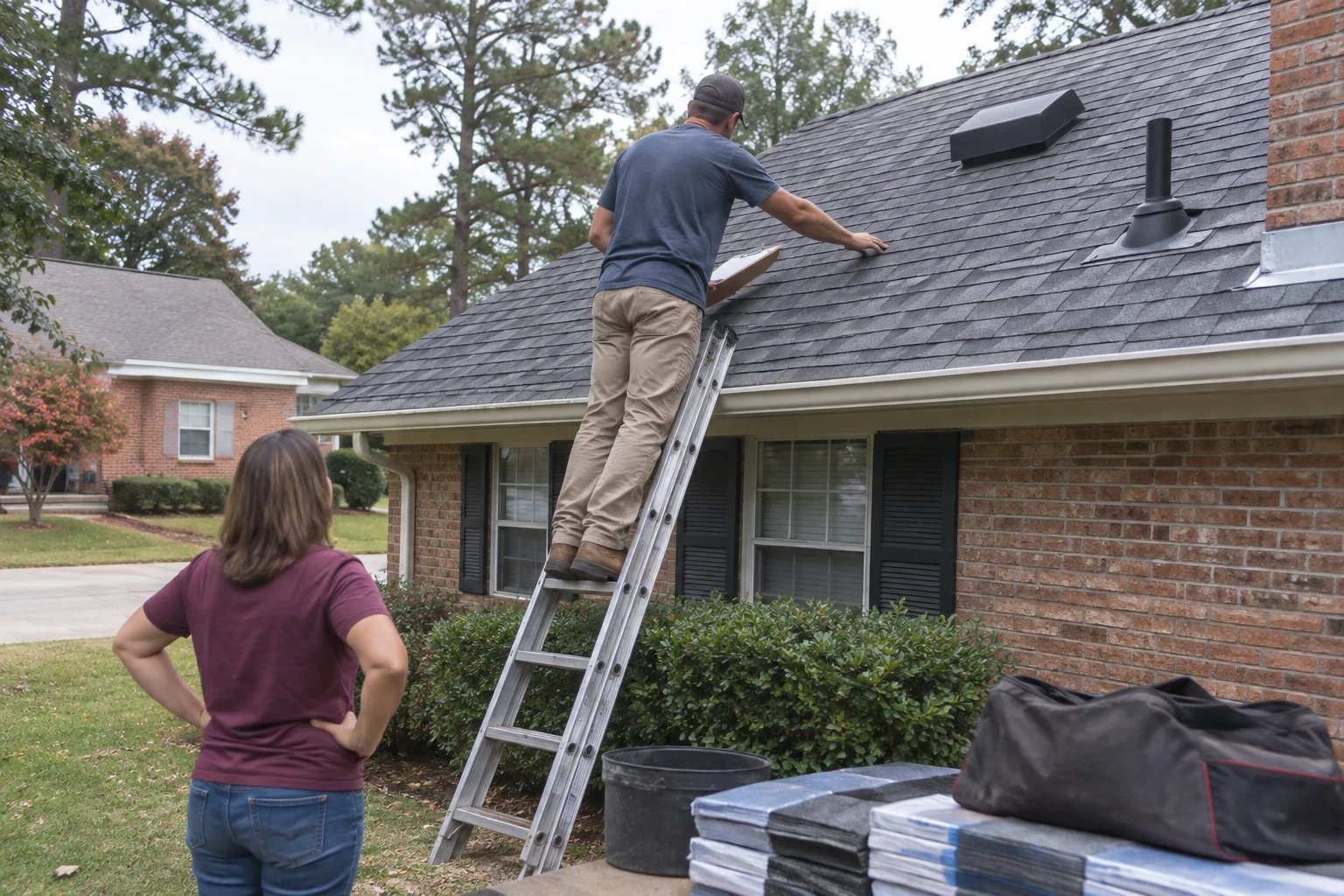
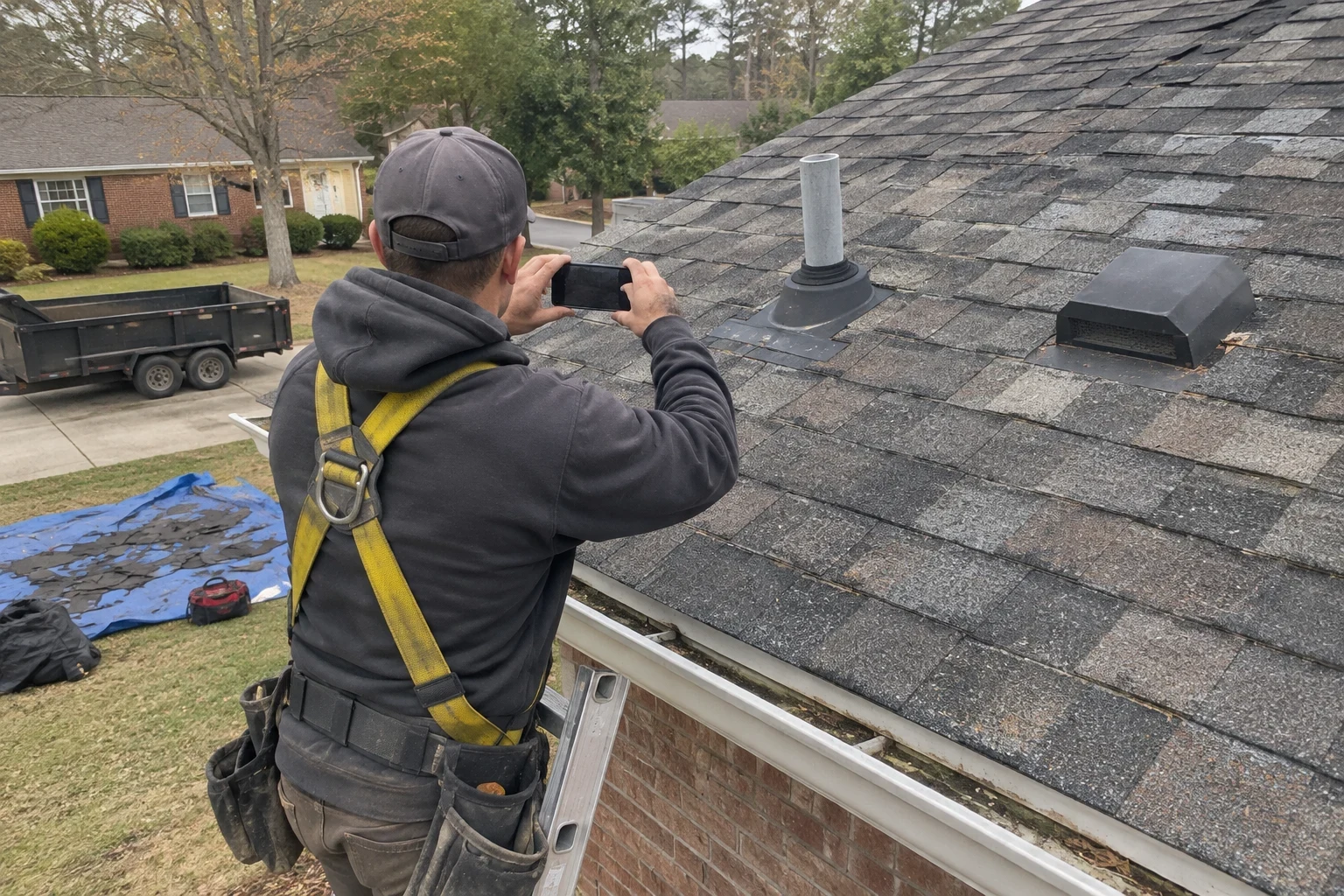
We get up on the roof, look closely and show you exactly what we found. Every free roof inspection ends with a photo report, so you can see the problem spots yourself and decide what comes next without anyone pushing you.
Find out where your roof stands before you spend a dollar
Roof damage rarely announces itself. A tab lifted by wind, a rubber boot split around a vent, or a nail head creeping up under the shingle above can go unnoticed for months, because none of it is visible from the driveway. An inspection makes sense when you're buying or selling, after a hard storm, when a stain shows up on a ceiling, or when your roof is aging and you want to know how much time it has left.
We tell you the truth about what we see. Some visits end with a small fix handled through our roof repair work. Others end with good news: the roof is sound and should be left alone. If roof replacement is the right move, the photos will show you why, and we'll talk through timing so you can plan for it.
Butner summers bring hard thunderstorms and weeks of muggy heat, and most winters deliver at least one round of ice. That back and forth wears on shingles, sealant and flashing year after year, which is why we look well beyond the surface.
What we look at during your inspection
- Shingle condition
- We check for bare spots where granules have worn off, tabs that are cracked or curling, creases left by wind, and any give in the decking as we walk. The amount of granules collecting in your gutters is one of the best clues to how worn the shingles are.
- Flashing, vents and other openings
- Leaks most often start where something breaks through the roof: chimneys, skylights, sidewalls and vent pipes. We inspect the metal flashing, the sealant and the rubber boots around pipes, which tend to split from sun exposure well before the shingles give out.
- Attic and airflow
- If the attic is reachable, we look for light coming through, wet insulation, darkened sheathing and signs that air isn't moving well. Trapped heat up there ages shingles faster and can lead to mold.
- Gutters and runoff
- We confirm your gutters are firmly fastened, pitched toward the downspouts and clear of pine needles. When water backs up behind the drip edge, it rots fascia and decking over time. Our Gutters page explains the work we do there.
- The photo report you keep
- Each issue is photographed and labeled by where it sits on your roof, along with a plain-language note on what it means and how urgent it is. Hold on to it for your files, an insurance claim or the sale of your home.
When a roof inspection makes sense
A stain on a ceiling or wall
A brownish ring on an upstairs ceiling usually means a leak has been active for some time. Tracking it down early keeps the repair smaller.
Hail or high wind just passed through
Hail bruising and wind-lifted shingles are tough to see from the ground. Checking soon after the storm records the damage while it's clear, which helps with a claim.
Granules collecting in the gutters
Some loose granules are expected on a newer roof. A thick layer coming off an older one means the shingles are losing their protection.
An older roof
As a shingle roof gets into its middle years, minor issues begin to pile up. Checking it now lets you budget ahead instead of scrambling after a leak.
A sale, purchase or refinance
Many general home inspectors never climb onto the roof. A roof-focused inspection gives buyers and sellers real photos and details to rely on.
Moss, streaks or a dip in the roofline
Dark streaks are usually algae and mostly a looks issue. Moss traps moisture against the shingles, and a dip along the roofline may signal decking or framing problems below.
The inspection is free. Here's what shapes the cost of any work after it.
You pay nothing for the inspection or the photo report. When something on your roof does need fixing, the report points out the details that set the price. Before any work begins, you get a written estimate, so you know the number ahead of time.
How big the problem is
Replacing one split pipe boot takes very little time. Redoing the flashing around a chimney or cutting out a section of decking calls for more labor and more material.
Pitch, height and access
A steep pitch, a second story or branches crowding the roofline mean extra safety gear and slower, more careful work.
Hidden decking damage
Rotted or spongy decking can't be fully confirmed until the shingles are removed. If we suspect it, we say so in advance and explain how it might affect your estimate.
Insurance and financing options
If a covered storm caused the damage, your claim may handle a large share of the cost, and we can join adjuster meetings and help you through the claim. For bigger repairs or a full replacement, financing is available through Acorn Finance.
What happens on inspection day
- 1
Start with a call
Let us know what you've spotted and what you know about the roof, such as its age or any earlier leaks. We'll pick a time that works for you. There's no need to be home while we check the outside unless you want to be.
- 2
Around the house and on the roof
We start with a walk around your home, then climb up once conditions are safe. We place our feet with care so brittle shingles don't crack, and we position ladders so your gutters don't get bent.
- 3
A look in the attic
With your okay, we head up through the attic access and study the bare boards from below, watching for damp spots, daylight showing through and signs of poor airflow. A slow leak often shows itself more clearly from that side than from the shingles.
- 4
Going over what we found
We go through the photos with you and say plainly whether the roof needs nothing, a repair or a replacement. If a storm caused the damage, we explain how claims work and can be there when your adjuster visits. You're never pushed to schedule work.
Common questions about roof inspections
Is the roof inspection really free?
It is. The inspection and the photo report cost you nothing, and you're under no obligation to hire us. We'd rather you have good information and reach out when the timing is right for you.
How much time should I set aside?
Most houses take roughly an hour from start to finish. A bigger or steeper roof, or an attic that's hard to move around in, can stretch that a bit. We'll give you an estimate of the time when we book the visit.
Does someone need to be home?
The outside work can happen while you're away. To check the attic, we'll need someone to let us in. A lot of homeowners choose to be there at the end so we can look through the photos together.
What if my roof is steep or it's raining?
We only go up when it's safe. On a wet day or a very steep roof, we may work from the eaves with close-up photos and return for a full walk once the weather cooperates.
Will an inspection help with an insurance claim?
It can. Clear photos taken shortly after a storm make it easier to show the damage that occurred. We'll explain how the claim process typically works and can meet your adjuster at your home, though the coverage decision belongs to your insurer.
How often should a roof be inspected?
Once every year or two is a good routine, along with a check after any storm that brings hail or strong wind. Late fall is a handy time, after the leaves and pine needles have dropped and before cold weather sets in.
See your roof the way we see it
Tell us what's going on and we'll set up a free inspection. You'll get a photo report to keep and a straight answer about what, if anything, needs doing.